







Instant messaging : what are the implications for customer relationships ?
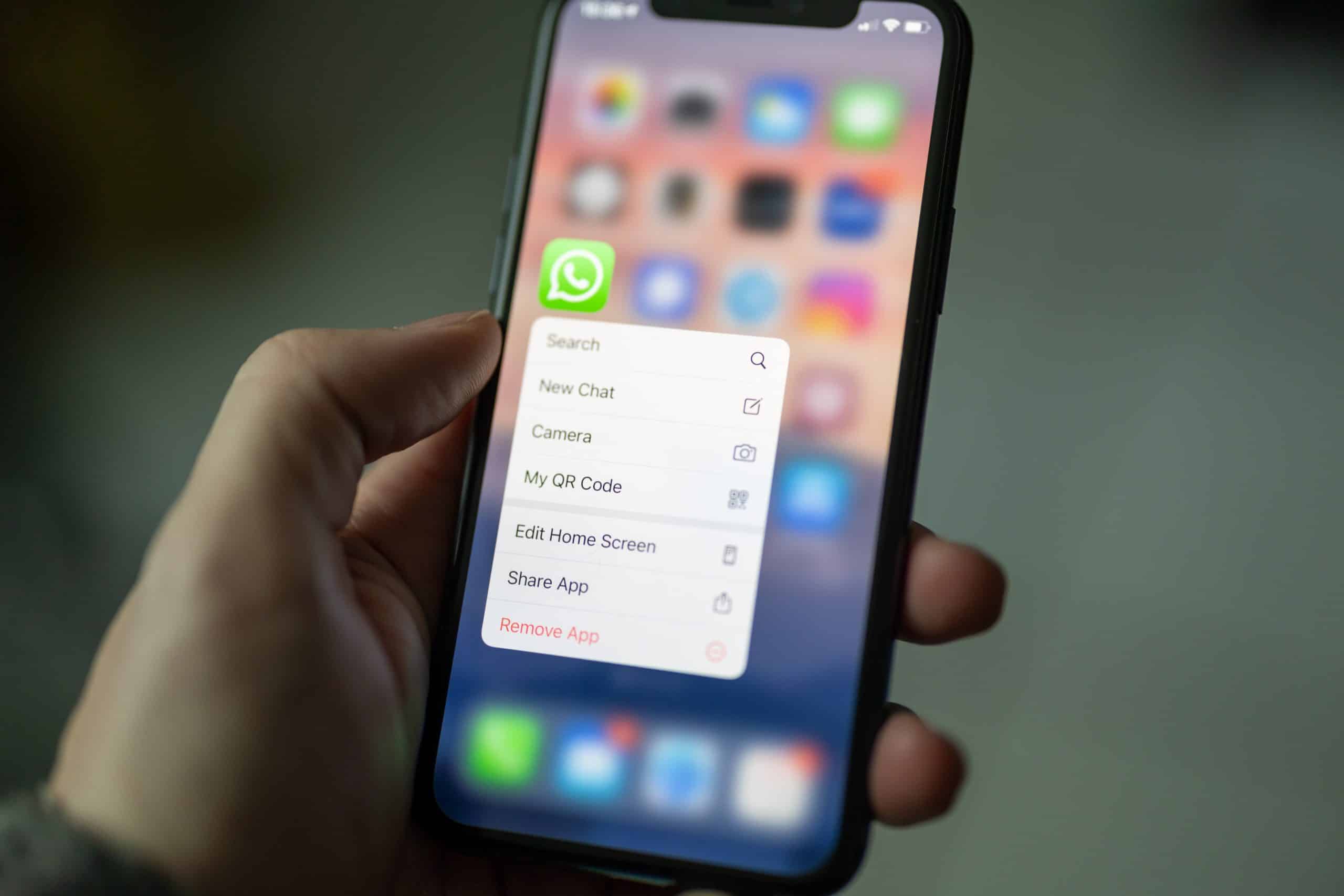
Instant messaging, communication channels still experiencing strong growth
Instant messaging applications, led by WhatsApp and Messenger, have, through sustained growth, eclipsed several communication channels that were until recently considered essential, such as SMS. Their number of users has increased significantly in recent years and is expected to reach 3 billion by 2022.
However, the use of these channels is no longer limited to the private sphere. Instant messaging is increasingly being adopted by companies as a tool for customer interaction. According to the Washington Post, 20 million businesses use Messenger to communicate with their customers. Software provider Zendesk goes further, stating that 25% of companies already use instant messaging applications, with an additional 11% likely to adopt them in the near future.
These channels, more recently adopted in B2C contexts, are also highly successful among consumers. 70% of individuals prefer communicating with a brand via text messaging rather than by phone when both options are available. This can range from requesting a new insurance contract to discussing the purchase of a car or a household appliance with an advisor. As further evidence of this trend, customer satisfaction is 25% higher for interactions conducted via messaging applications compared to phone calls.
New channels with specific characteristics
Instant messaging platforms such as WhatsApp, Messenger, Twitter or Apple Business Chat belong to the category of asynchronous channels : they enable active yet non continuous exchanges, without requiring immediate responses between messages. These channels differ from synchronous channels, such as live chat, which involve real time digital interaction, and from physical channels such as phone calls. They are generally multi platform, accessible on both mobile and desktop devices.
Among asynchronous channels, instant messaging stands out from other communication methods such as email due to its more modern perception.
Benefits for both businesses and customers
The use of these channels in customer relationships offers numerous advantages for both businesses and individuals.
From a business perspective, leveraging instant messaging in customer interactions improves efficiency, for example by enabling advisors to handle multiple requests simultaneously. Their asynchronous nature also allows for better workload distribution, as advisors can manage response times and smooth out demand peaks.
Customer interactions also become more personal, as users engage with advisors through interfaces they already use daily to communicate with friends and family. In addition, adopting instant messaging reinforces a brand’s image of modernity and technological adaptability, positioning it strongly on a dimension that is becoming increasingly critical in delivering high quality customer experience.
From a customer perspective, instant messaging simplifies interactions with advisors, as communication takes place through a channel already embedded in everyday personal use. Customers can also express their needs at any time, regardless of traditional call centre opening hours.
These channels are also valued for their ease of use : users can submit requests and receive responses within a single conversation thread, with access to interaction history and the ability to easily share documents in various formats (videos, photos, PDF files).
Untapped potential
Instant messaging is increasingly adopted by companies as a customer relationship tool. However, its full potential is not always realised, often due to limited deployment resources.
In many cases, advisors are not fully integrated into conversation management tools, leading to channel fragmentation : a customer who initially contacts a brand via instant messaging may be redirected to another channel, or a community manager handling the request may need to leave the platform to forward it to an advisor.
To deliver an optimal customer experience on these channels, companies must design seamless journeys, without friction, supported by an appropriate level of automation. Bots, which are among the standard levers implemented by eleven to support companies in their digital transformation, can be particularly effective in this regard, especially for automating simple interactions.
However, customers still favour human interaction, and companies must therefore enable a smooth transition to a live advisor at any time. Defining the right balance between automation and human interaction, by identifying where technological innovation truly creates value, is a key challenge in the digital strategies supported by eleven.
Ultimately, the success of these channels largely depends on a company’s ability to efficiently route requests to the right advisor, ensuring responses that are both fast and aligned with customer expectations. True value creation is only possible if the customer journey is sufficiently simple, leaving no reason for the user to switch to another channel such as a phone call : a conversation thread accessible in one click from a website, followed by a relevant response after just a few messages.
Otherwise, customers may be forced to switch channels, exposing the company to increased volumes and reduced customer satisfaction. It is therefore the responsibility of organisations to deploy the necessary resources to ensure optimal use of these channels.
Léo Poitou, Simon Georges Kot, Morand Studer
Notes and references : https://www.statista.com/statistics/483255/number-of-mobile-messaging-users-worldwide/ https://www.washingtonpost.com/technology/2018/08/09/want-better-customer-service-dont-call-text/ https://www.zendesk.com/service/messaging/state-of-messaging-2020/