







Connected devices : beyond consumer usage, a lever for measuring and continuously improving customer experience
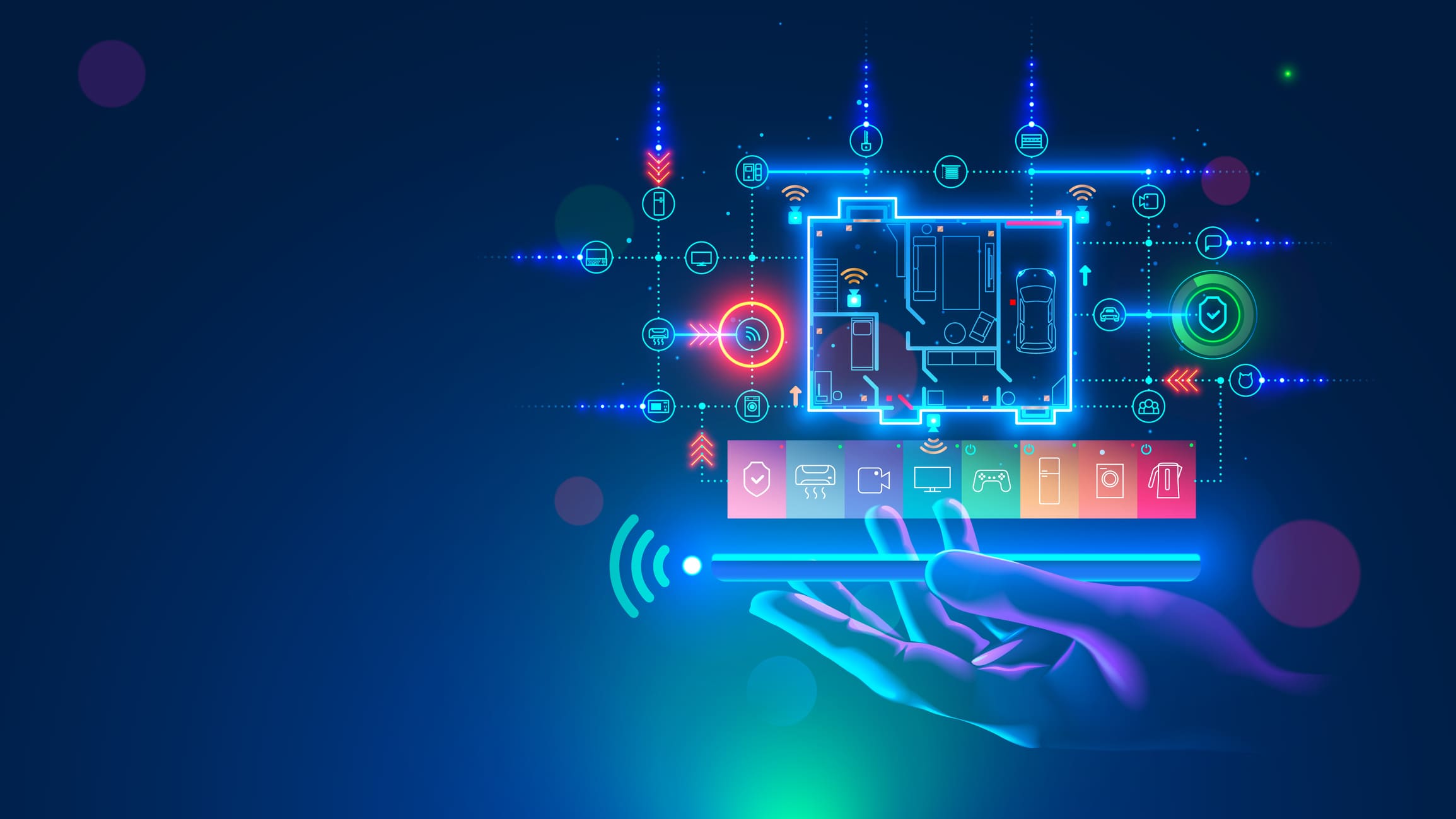
Media and experts share the same view : connected devices will multiply and become part of every consumer’s daily life. Gartner places the Internet of Things at the peak of its Hype Cycle [1] and forecasts 25 billion connected devices by 2020 : tomorrow, everything will be connected.
Beyond consumer usage, connected devices offer new opportunities for businesses. When used internally within production chains, they can help reduce manufacturing costs, notably through improved inventory and product flow management, as well as predictive maintenance of equipment and machinery.
Connected devices also enable companies to establish a direct communication channel with their customers. It is this channel, created between the company and its customer, that is of particular interest here. It can serve as a lever for continuous product improvement through a deeper understanding of user experience. How can a company, by connecting the products it markets, quantify customer experience and integrate these insights into a continuous improvement process ?
Today, connected devices provide companies with the ability to capture quantified feedback on product usage. To fully leverage this data, organisations must be able to collect, process and interpret it, before building agile processes that use these insights to continuously enhance customer experience.
To illustrate this approach, we will consider the examples of Oral B with its SmartSeries connected toothbrush [3] and Tesla with its Model S and Model X connected vehicles [4].
Collecting and storing usage data from connected devices : what are the key structuring choices ?
Two main choices structure the collection of usage data from connected devices : the selection of the communication channel and the definition of the data lifecycle.
Different communication channels can be used to connect a device to the internet : a company may choose to connect its device directly to a cellular network, using high bandwidth technologies such as 3G or 4G, or low bandwidth alternatives such as Sigfox or LoRa, or rely on an intermediary hub acting as a relay, such as a smartphone for individuals or a home internet box for smart homes.
The choice of communication channel not only impacts communication costs, but also influences product design, the volume of data that can be transmitted and data ownership.
Once collected, data must be stored, whether structured or unstructured. Decisions made at this stage largely determine the overall cost of the process. Defining the data lifecycle upstream allows companies to optimise data usage while avoiding unnecessary storage costs for unused data.
This data lifecycle consists in selecting the types of data to be collected and defining, for each, a lifecycle path : storage in structured or unstructured databases, retention duration and target processing algorithms. For example, Oral B could categorise and segment its data into user profile data, brushing duration data and brushing quality data.
Processing data : from customer profile to customer usage
Once collected, product usage data can be combined and processed using algorithms to identify correlations, similarities or differences in how connected devices are used by different customers. The objective of these algorithms is to transform large volumes of data, from Big Data to Smart Data, into actionable insights.
Using connected device usage data, clustering algorithms can, for example, define customer user profiles by grouping individuals not based on demographic characteristics, but on their usage patterns. Oral B could therefore segment its customers not by age or gender, but by brushing duration. Similarly, using driving data from its connected vehicles (Model S, Model X), Tesla could segment its customers based on driving behaviour.
Interpreting data : towards a data driven culture
When actionable insights reach management, they are often underutilised. Companies that quantify product usage must learn to make decisions based on data. One effective approach is to bridge the gap between data scientists and business managers, between data and strategic decision making.
Adopting a data driven culture enables organisations to fully leverage usage data to improve customer experience. This transformation requires training data scientists on business challenges and involving them in strategic decisions, as well as training managers to read, understand and interpret quantitative reports and datasets.
Building agile processes : towards self learning connected products
Once decisions to improve customer experience have been made, companies must implement agile processes to deliver these improvements. Connected devices enable rapid testing of new ideas through software updates deployed to selected user groups, allowing early feedback collection.
For example, Oral B can test the introduction of gamification features within its application and measure the impact in real time through brushing duration and frequency data.
With connected devices, agile improvement of customer experience can go even further, towards self learning systems. By integrating all necessary hardware at the time of product launch, companies can enhance customer experience through simple software updates. Improvements can thus be deployed instantly on existing products.
For instance, on October 12, Tesla enabled autonomous driving capabilities on the Model S through a software update (version 7.0), deploying the Autopilot feature. Software updates therefore provide connected devices with continuous improvement and self learning capabilities.
Morand Studer
(i) Structured and unstructured data : structured data refers to information that is organised and formatted to facilitate processing and analysis. In contrast, unstructured data refers to any data that does not conform to a predefined structure.
(ii) Clustering : méthodes statistiques visant à diviser un ensemble de données en différents « groupes » homogènes, partageant des caractéristiques communes
(iii) Culture d’entreprise Data-Driven : lorsque les décisions dans une entreprise sont basées sur des données plus que sur des intuitions
(iv) Lufication (gamification) : introduction de mécanismes du jeu dans d’autres domaines en pour augmenter l’acceptabilité et l’usage
Sources :
[1] Gartner, Press release, Gartner's 2015 Hype Cycle for Emerging Technologies, 18/09/2015, gartner.com/newsroom/id/3114217
[2] Gartner, Press release, Gartner Says 4.9 Billion Connected "Things" Will Be in Use in 2015, 11/11/2014, gartner.com/newsroom/id/2905717
[3] Aruco, Test, La brosse à dents connectée Oral B, 10/03/2015, aruco.com/03/oralb-smartseries
[4] Aruco, La Tesla Model S devient progressivement une voiture autonome, grâce à la MAJ 7.0, 12/10/2015, aruco.com/2015/10/tesla-models-autopilot-firmware7-0