







Electric vehicle charging demand : data and AI to the rescue
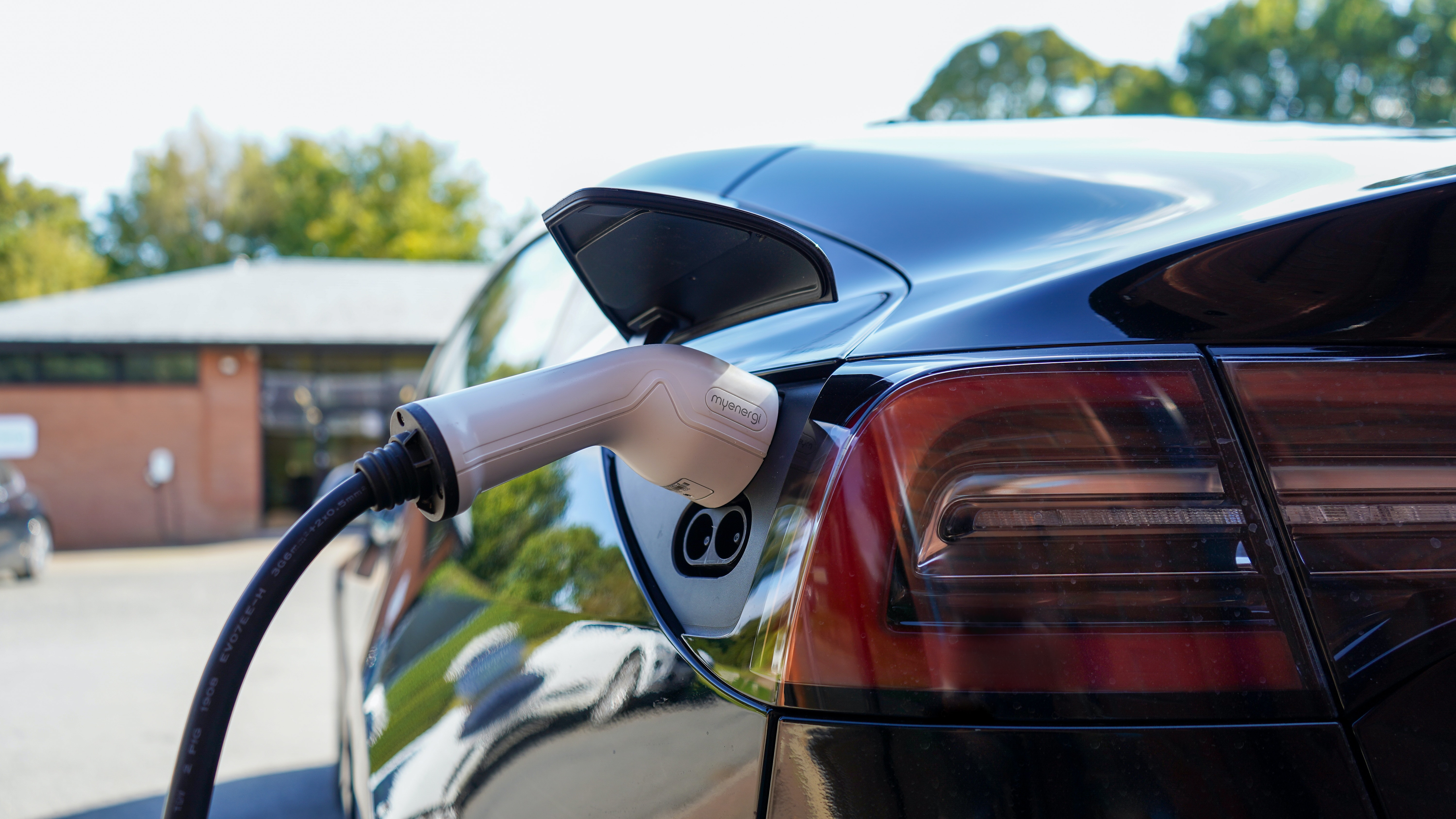
Electric vehicle charging : a booming ecosystem
The number of electric vehicles registered in France continues to grow at an impressive pace each year : +34% over the last twelve months¹. Nearly 225,000 additional vehicles joined the fleet in circulation, bringing the total to 915,000 vehicles as of September 2023.
This rapid expansion is driven by the convergence of numerous favorable structural factors : growing public environmental awareness, regulatory constraints such as Low Emission Zones (LEZs) in city centers, decreasing vehicle prices, broader product ranges, improved vehicle performance such as increased driving range, tax and regulatory incentives including purchase subsidies, corporate fleet electrification, rising fossil fuel costs, and more.
Alongside the growth of the vehicle fleet, Electric Vehicle Charging Infrastructure (EVCI) has also expanded rapidly, with the number of charging stations increasing by 59% between September 2022 and September 2023².
This parallel growth is likewise supported by public policies such as PPE and the Advenir program, but also by increasing private-sector investment, with funding rounds becoming both more frequent and larger.
However, the apparent parallelism between these two growth curves hides several decoupling factors. Between the increase in the number of electric vehicles and the evolution of charging demand lies a complex transfer equation that Data and AI, and therefore Eleven, can help solve.
Anticipating EVCI demand : much more than a simple volume × value equation
The strategic consulting approach of breaking down a complex issue into simpler sub-problems already provides an initial layer of understanding.
From a volume perspective first, the amount of energy distributed through charging stations depends primarily on the distance traveled, and to some extent on driving conditions : driver behavior, weather conditions, and similar variables.
This leads to an initial segmentation between two categories :
On the one hand, the “light driver,” whose mobility revolves mainly around commuting and leisure travel such as evenings, weekends, and vacations.
On the other hand, the “heavy driver,” whose vehicle accumulates trips throughout the day : deliveries, field operations, technical interventions, and similar activities.
The first profile generally corresponds to private individuals or company car users. The second corresponds to “road workers,” or at least people who spend a significant portion of their working time driving.
The needs of these two types of consumers, leaving aside heavy trucks which operate within their own specific ecosystem, are then divided into three major charging categories :
- Home or workplace charging (and sometimes hotel charging), generally without time constraints, therefore often slow charging and typically relying on private charging stations.
- Destination charging (shopping malls, public parking lots), where drivers recharge while carrying out another activity.
- On-the-road charging (or roaming charging), when drivers stop specifically to recharge and avoid running out of battery, a world dominated by fast and ultra-fast charging solutions.

Fast charging station “on the road” in the Swiss Alps
We therefore have two types of consumers, whose demand is distributed across three types of charging.
The light driver will primarily rely on private home charging and, for occasional long-distance trips, public charging on the road, with perhaps some destination charging at vacation locations. To cover approximately 8,000 km per year, this user will recharge their battery around 40 to 60 times annually, with each session delivering roughly 40 to 50 kWh.
The heavy driver, by contrast, will display completely different behavior because their charging needs are far more frequent and critical.
This first level of segmentation illustrates why it is not simply the growth in the number of electric vehicles that matters, but rather the profile of the driver behind the wheel.
For example, the arrival of more affordable electric vehicles increases the proportion of “light drivers” within the overall vehicle fleet, which in turn reshapes charging demand.
At Eleven, we have developed a far more granular usage segmentation model to better understand and anticipate market evolution.
But the complexity does not stop there.
Indeed, even within a single segment, demand constantly evolves.
Over the long term, improvements in electric vehicle offerings, particularly in terms of driving range, reduce the need for on-the-road charging among light drivers. Conversely, the deployment of public charging infrastructure at affordable prices reduces the need for extremely long vehicle ranges and therefore supports charging demand.
Other factors related to user behavior, such as the maturity of consumers toward these new mobility habits, also influence charging demand.
For example, experienced EV users are less likely to rush toward destination charging solutions when they already have sufficient battery range to comfortably return home.
Over shorter time horizons, demand is subject to seasonal effects linked both to vacation travel and weather-related consumption patterns, weekly cycles such as commuting during weekdays and leisure or shopping trips during weekends, as well as hourly demand peaks.
This variability in demand inevitably impacts charging infrastructure supply, both in terms of available capacity and pricing models.
Finally, as if things were not already complex enough, all these demand dimensions depend on local parameters. They are not uniformly distributed across a territory. So, is it actually possible to make sense of such a complex ecosystem ?
Thankfully, Data comes to the rescue.
Like many emerging paradigms, the adoption of electric vehicles and the corresponding deployment of adequate charging infrastructure still involve significant uncertainty. However, market players are not reduced to making blind bets.
On the one hand, data has already started accumulating, some of it available through Open Data sources : electric vehicle registrations, installed charging station fleets by charging type, surrounding building typologies (residential, retail, office spaces), local purchasing power, and more.
On the other hand, these prediction problems, which often exceed the analytical capabilities of the human brain, are particularly well suited for Artificial Intelligence models such as time series analysis, Bayesian networks, and Machine Learning algorithms.
The models we have already implemented using public data sources are highly insightful. Once enriched with private operational data from existing charging infrastructures, such as real charging session histories including volumes and durations, their predictive power will become even stronger.
Anticipating electric vehicle charging demand is a major challenge for all stakeholders in the market. Developing a precise understanding of the associated economic dynamics requires a comprehensive vision of the entire electric mobility ecosystem.
Through its deep expertise in mobility and energy markets, combined with advanced data science capabilities, Eleven is ideally positioned to help organizations successfully navigate this rapidly evolving landscape.
Sources